Body Damage & Panel Repair
Dents, creases, accident damage and rust put right and refinished.
Read moreTwo very different answers to a damaged panel. We will tell you honestly which one your car needs — and PDR, where it works, keeps your original factory paint completely intact.
Refinishing
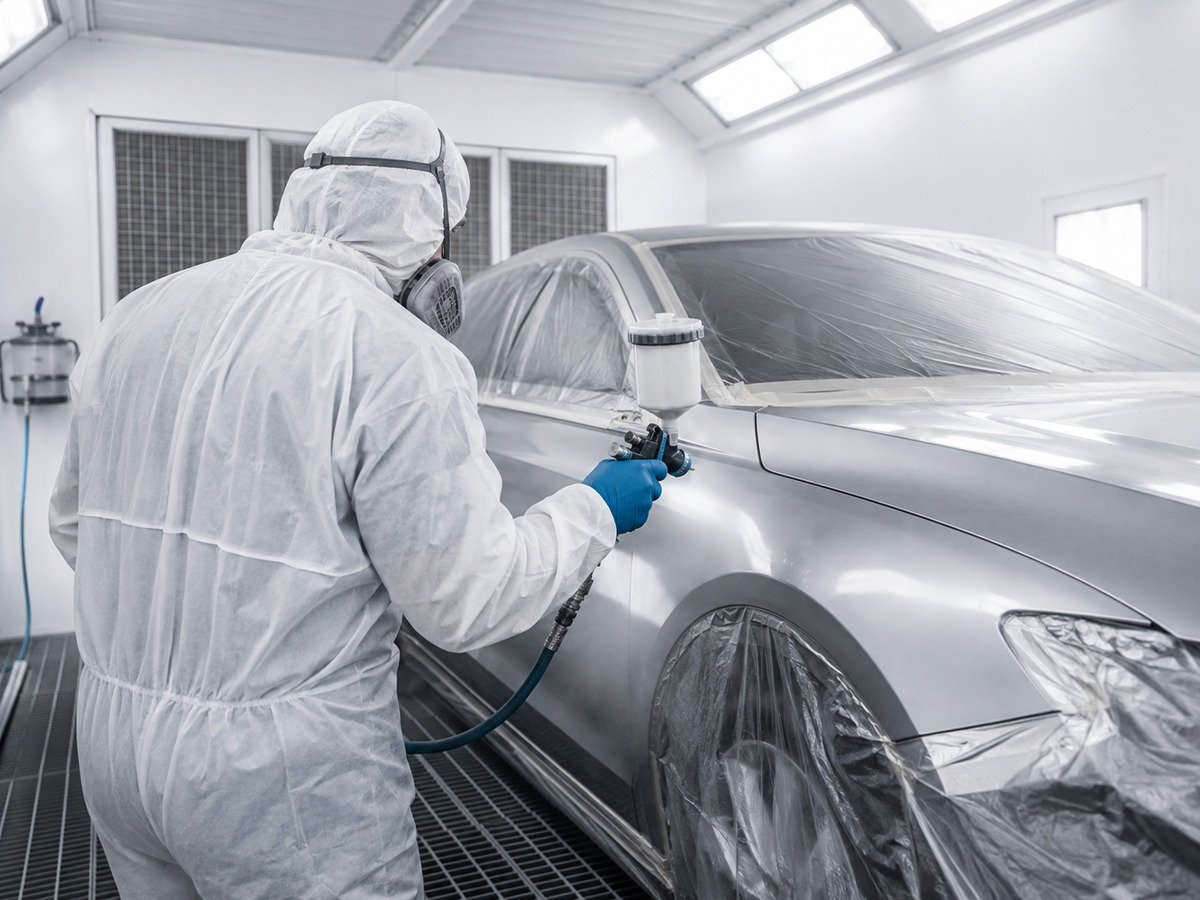
A respray is only as good as the colour match. We start from your vehicle’s paint code, mix and tint in-house, and spray test cards that we hold against the actual panel in daylight before the car is touched.
Where a colour is difficult — metallics, pearls and reds that have faded with age — we blend into the adjacent panels so there is no hard edge for the eye to catch.
Paintless dent removal
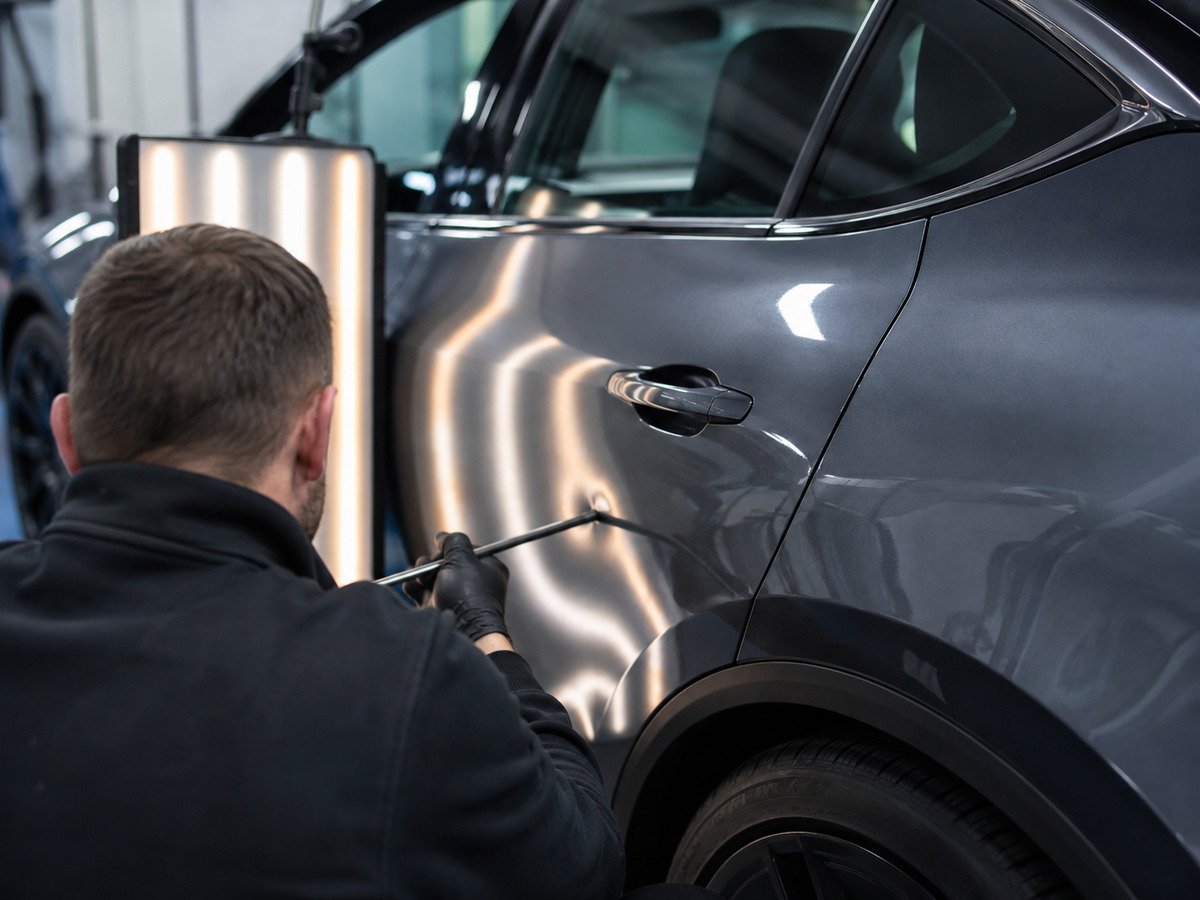
Where the paint surface is unbroken and we can reach behind the panel, PDR is almost always the better answer. Specialist rods and tapping tools work the metal back to shape from underneath — no filler, no primer, no paint, and nothing for a future buyer’s paint-depth gauge to find.
When PDR will not work: if the paint is cracked or chipped, if the metal is stretched or creased sharply, or if the back of the panel is sealed and unreachable. In those cases a conventional repair and refinish is the honest answer, and we will say so.
Our process
Paint is mostly preparation. The spraying is the short part.
The panel is flatted, feathered and cleaned. Anything that is not being painted is masked properly, not taped over roughly.
Paint code, in-house mix, test card held against the panel in daylight. Only then does the gun come near the car.
Primer, colour and lacquer, each with proper flash-off between coats. Rushing this is exactly how a repair ends up looking like a repair.
Cured, flatted and machine polished, then checked in good light before you see the car.
Questions
Usually, yes — and it is quicker. There is no filler, primer or paint involved and often no drying time, so many PDR jobs are finished the same day. The catch is that it only works when the paint is unbroken and we can get behind the panel.
Whichever gives the better result. A small chip in the middle of a large flat panel can often be spot-repaired and blended. Damage near an edge or across a body line usually means taking the whole panel, because a hard paint edge in the wrong place is far more visible than the original damage.
Yes. Clear-coat failure cannot be polished out — the lacquer layer has broken down and has to come back to a sound base before the panel is re-primed, coloured and re-lacquered. It is a bigger job than it looks, but it is a permanent fix.
Leave it a couple of weeks before machine polishing, waxing or a pressure wash close to the repair — fresh paint keeps hardening after it leaves us. A gentle hand wash is fine straight away. We will remind you when you collect it.
More services
Free quotes, honest advice and no pressure to book. Ring us or send a photo — we’ll tell you what it needs.